
Hey there, fellow explorers of the financial universe! Have you ever paused to think about what truly underpins the colossal, intricate world of insurance?

It’s far more than just signing up for policies or paying monthly premiums; it’s a profound, almost artistic mastery of risk assessment. And who are the quiet maestros behind this incredible feat?
Our incredibly smart actuaries! Their domain, traditionally rooted in sophisticated statistical models and historical data, is now in the midst of a spectacular revolution.
We’re witnessing a paradigm shift, folks, fueled by groundbreaking advanced analytics, the sheer power of artificial intelligence, and an ocean of data that’s changing everything.
From precisely forecasting future trends and managing unforeseen risks to crafting personalized insurance solutions that truly fit individual needs, the entire industry is being reshaped at an exhilarating pace.
I’ve personally observed how these cutting-edge innovations aren’t just fine-tuning existing processes, but fundamentally redefining how we perceive and safeguard against risk in our daily lives.
It’s genuinely an electrifying period to be delving into this unique blend of mathematical genius, technological advancement, and tangible real-world impact.
If you’re intrigued by how these brilliant minds are harnessing next-level tools to secure our collective future, or perhaps even contemplating a career path in this incredibly dynamic arena, then you are absolutely in the right spot!
Let’s dive deeper and uncover the fascinating nuances that define this evolving field right below.
The Actuarial Renaissance: From Number Crunchers to Visionaries
Embracing Predictive Power
You know, for years, actuaries were seen as the quiet, brilliant minds hidden away, poring over dusty books and complex formulas to calculate the odds.
And don’t get me wrong, their traditional methods were solid, forming the bedrock of the entire insurance industry. But what I’ve seen unfolding over the last few years is nothing short of a renaissance!
It’s like they’ve traded their abacuses for quantum computers – okay, maybe a slight exaggeration, but you get my drift. The shift towards predictive analytics isn’t just an upgrade; it’s a complete reimagining of what’s possible.
Instead of just looking backward at historical claims data, these modern actuarial wizards are now forecasting future risks with an astonishing degree of accuracy.
I recall a conversation with an actuary who mentioned how they’re now building models that can anticipate the likelihood of specific events, from localized weather anomalies impacting property claims to shifts in public health trends affecting life insurance payouts.
This isn’t just about minimizing losses for companies; it’s about creating a more stable, predictable future for all of us. The level of detail and foresight they can achieve now is truly mind-blowing, moving beyond simple probability to nuanced, real-world scenario planning.
It’s an exciting time to witness this transformation firsthand, seeing how data transforms from mere information into actionable intelligence that secures our collective well-being.
The Art of Proactive Risk Intelligence
Think about it: traditionally, risk management was often reactive. Something bad happened, we learned from it, and then we adjusted. But with the incredible tools available today, actuaries are no longer just reacting; they’re becoming proactive risk intelligence artists.
They’re developing intricate models that don’t just tell you *what* happened, but *why* it happened and *what might happen next* before it even does. From my perspective, this is where the real magic happens.
Imagine insurers being able to identify emerging risk patterns in real-time, perhaps flagging areas prone to specific types of fraud or predicting the impact of new technologies on liability claims before they become widespread issues.
This isn’t just about tweaking premium prices; it’s about fundamentally understanding the underlying dynamics of risk in a way that was previously impossible.
I’ve seen examples where insurers can offer personalized advice to policyholders on how to mitigate risks in their daily lives, turning a transactional relationship into a genuinely preventative partnership.
This shift towards proactive intelligence is fostering a safer environment for everyone, making insurance not just a safety net, but a powerful tool for foresight.
AI’s Unleashing: From Complex Data to Clear Decisions
Demystifying Deep Learning for Actuaries
When I first heard about AI making inroads into the actuarial world, I admit, I was a bit skeptical. Would it just be a black box, spitting out answers without understanding the ‘why’?
But oh, how wrong I was! What I’ve seen is actuaries not being replaced by AI, but empowered by it. They’re leveraging deep learning models to analyze colossal, unstructured datasets that would be impossible for a human to process.
We’re talking about everything from social media sentiment that might indicate emerging health trends to satellite imagery that can assess property damage risks more accurately than ever before.
It’s not about the AI making the final decision, but about it serving as an incredibly powerful assistant, sifting through mountains of information to highlight critical patterns and anomalies.
This allows actuaries to focus their incredible human intellect on the most complex problems, the ethical considerations, and the strategic implications.
From what I’ve observed, these tools are helping them develop far more nuanced and precise risk profiles, which ultimately benefits us, the consumers, with fairer and more accurate pricing.
It’s truly a collaborative dance between human expertise and machine intelligence, and it’s fascinating to watch.
Automation and Efficiency Gains
Let’s be real, a lot of the traditional actuarial work, while vital, involved a significant amount of repetitive data processing and manual calculation.
And frankly, that’s where AI and machine learning really shine, freeing up these brilliant minds for more strategic endeavors. I’ve witnessed firsthand how automation, powered by AI, is revolutionizing the back-end processes, speeding up everything from claims processing to policy underwriting.
This isn’t just about cutting costs for insurance companies, though that’s certainly a benefit. More importantly, it means a faster, smoother experience for us.
Imagine filing a claim and having it processed in a fraction of the time, or getting a policy quote almost instantly because the system can assess your risk profile in mere seconds.
This efficiency isn’t just about speed; it’s about accuracy and consistency, reducing human error and ensuring that decisions are made based on the most up-to-date and comprehensive data.
It’s making the entire insurance ecosystem more responsive and agile, which is a massive win for everyone involved. I really do think this evolution is bringing us closer to an ideal future where insurance is less of a bureaucratic hurdle and more of a seamless, supportive part of our lives.
The Data Deluge: Transforming Raw Information into Golden Insights
Big Data’s Impact on Risk Modeling
We live in an era where data is generated at an unbelievable pace, often referred to as a “data deluge.” And honestly, in the past, much of this raw information was just noise.
But now, thanks to sophisticated analytical tools and actuarial expertise, this deluge is being transformed into a veritable goldmine of insights for risk modeling.
Think about all the data points that are now accessible: telematics from our cars, wearable health devices, public records, even demographic shifts captured through various digital footprints.
What I’ve personally found most fascinating is how actuaries are leveraging these diverse data streams to create incredibly granular risk models. It’s no longer just about your age and zip code; it’s about your actual driving habits, your health metrics, and even how well-maintained your home is, all contributing to a much more accurate picture of risk.
This level of detail allows for a much fairer assessment, moving away from broad generalizations to individualized profiles. It’s a huge step forward in making insurance truly personal and reflective of individual circumstances rather than relying on outdated averages.
Extracting Value from Unstructured Data
One of the biggest challenges, and now one of the greatest opportunities, lies in unstructured data. We’re talking about everything from customer service call transcripts to social media posts and even photos.
For a long time, this kind of data was incredibly difficult to analyze effectively. But with advancements in natural language processing (NLP) and computer vision, actuaries are now able to extract valuable insights from these seemingly chaotic sources.
For instance, I’ve heard about insurers using NLP to analyze policyholder feedback, identifying common pain points or emerging coverage needs that might not be apparent from structured survey data alone.
Or imagine computer vision being used to quickly assess damage after a natural disaster, speeding up claims processing significantly. This ability to make sense of the “messy” data is truly revolutionary, allowing actuaries to gain a more holistic and human-centric understanding of risk and customer needs.
It’s like finding a hidden language within the noise, unlocking deeper understandings that help build more resilient and responsive insurance products.
Personalized Protection: Crafting Policies for Tomorrow
Tailoring Policies with Precision
Remember the days when insurance policies felt like a one-size-fits-all straitjacket? Well, those days are rapidly fading into the rearview mirror, and it’s largely thanks to the confluence of actuarial science, advanced analytics, and AI.
What I’ve seen is a dramatic shift towards hyper-personalization, where insurance products are no longer generic but are carefully crafted to fit our unique lives, risk profiles, and even our current behaviors.
Imagine a car insurance policy that adjusts your premium based on how safely you drove *last month*, or a health insurance plan that rewards you for meeting fitness goals tracked by your wearable device.
This level of precision wasn’t just difficult before; it was practically impossible. Now, actuaries are using sophisticated algorithms to analyze individual data points, allowing insurers to offer policies that genuinely reflect individual risk rather than broad demographic averages.
From my perspective, this isn’t just a marketing gimmick; it’s a fundamental fairness issue, ensuring that those who manage their risks well are appropriately rewarded.
It fosters a more engaged relationship between policyholders and their providers, which is a win-win situation.
The Promise of Usage-Based Insurance (UBI)
Usage-Based Insurance, or UBI, is a perfect example of this personalized protection in action, and it’s something I’ve been incredibly keen on following.
It’s not a new concept, but the sophistication with which actuaries are implementing it now is truly groundbreaking. For auto insurance, this means devices in your car or apps on your phone tracking your driving habits – speed, braking, mileage, even the time of day you drive.
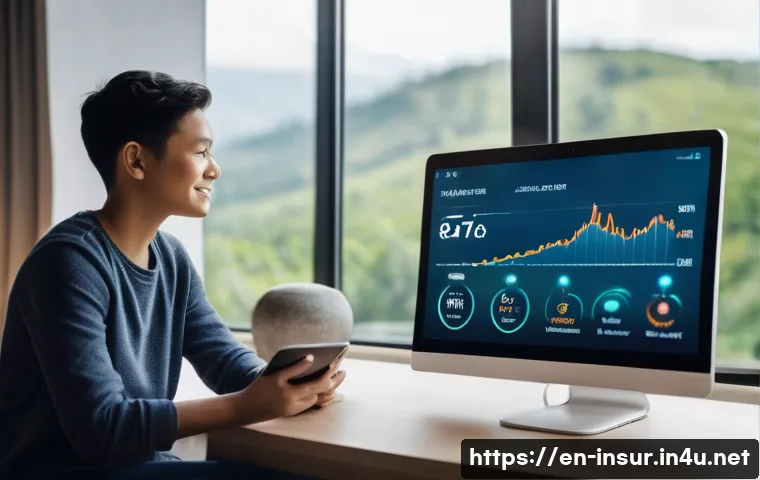
For health, it could be tied to activity levels or adherence to medication. The data collected then directly informs your premium. I’ve heard countless stories from friends who’ve saved a significant amount on their car insurance simply by demonstrating safe driving habits through a UBI program.
This system encourages safer behavior, reduces overall risk, and ensures that you’re only paying for the risk you actually represent, rather than subsidizing higher-risk drivers.
It’s a clear demonstration of how actuarial innovation, powered by new tech, is making insurance fairer, more transparent, and ultimately, more beneficial for the conscientious consumer.
Navigating the Unknown: Proactive Risk Management and Beyond
Anticipating Future Challenges
One of the most thrilling aspects of the evolution in actuarial science is its enhanced ability to anticipate future challenges rather than just reacting to past events.
It’s like having a crystal ball, but one powered by incredibly complex data models and machine learning. Actuaries are now building scenarios for everything from the long-term impacts of climate change on property insurance to the financial implications of emerging pandemics on health and life insurance markets.
What strikes me most is their capacity to model “black swan” events, those rare and unpredictable occurrences that can have massive consequences. By using advanced simulations and predictive analytics, they’re helping insurers stress-test their portfolios against a wider array of potential future shocks.
This isn’t just academic exercise; it has real-world implications, helping companies build more robust financial foundations and ensuring they can weather even unforeseen storms.
From my vantage point, this proactive foresight is absolutely critical in an increasingly volatile world, offering a layer of security we desperately need.
Building Resilience in Insurance Portfolios
Beyond just anticipating risks, modern actuarial practices are fundamentally focused on building resilience into insurance portfolios. This means moving beyond simple diversification to dynamic, adaptive strategies that can respond to changing market conditions and emerging threats.
I’ve been fascinated by how actuaries are now integrating external economic indicators, geopolitical shifts, and even social trends into their long-term models, allowing for more agile adjustments.
It’s not just about managing individual policies anymore; it’s about managing the entire ecosystem of risk that an insurer holds. This includes sophisticated reinsurance strategies, capital allocation optimization, and even the development of innovative new products that address previously uninsurable risks.
The goal, as I understand it, is to create a system that can absorb shocks, adapt quickly, and continue to provide essential protection to individuals and businesses, no matter what the future holds.
It’s a testament to how human ingenuity, combined with technological advancements, is making our financial safety nets stronger than ever.
| Feature | Traditional Actuarial Methods | Modern Actuarial Methods (with AI/Analytics) |
|---|---|---|
| Data Sources | Historical claims, demographic tables, mortality statistics | Big Data (telematics, wearables, social media, satellite imagery), real-time data streams |
| Risk Assessment | Broad statistical averages, generalized models | Hyper-personalized, granular risk profiles based on individual behavior |
| Modeling Techniques | Regression analysis, generalized linear models (GLMs) | Machine Learning (neural networks, random forests), deep learning, predictive analytics |
| Claim Processing | Manual review, rule-based systems | Automated processing, fraud detection algorithms, computer vision for damage assessment |
| Policy Customization | Limited, standardized products | Dynamic, usage-based insurance (UBI), personalized pricing and coverage |
| Actuary’s Role | Calculations, statistical analysis, reserving | Strategic insights, model interpretation, ethical oversight, innovation |
A Career Path to the Future: Becoming an Actuarial Innovator
The Allure of a Dynamic Profession
If you’re anything like me, you’re probably thinking, “Wow, this sounds like an incredibly dynamic and impactful field!” And you’d be absolutely right.
The actuarial profession, once perceived as somewhat niche and perhaps a tad dry, has transformed into one of the most exciting and intellectually stimulating careers out there, especially for those with a knack for numbers and a passion for problem-solving.
It’s no longer just about crunching numbers in a back office; it’s about being at the forefront of technological innovation, shaping the future of financial security for millions.
I’ve spoken with aspiring actuaries who are thrilled by the prospect of working with cutting-edge AI, developing algorithms that tackle real-world challenges, and contributing to the stability of entire economic systems.
The demand for these highly specialized skills is booming, and the opportunities for growth and influence are immense. It’s a path that offers both intellectual rigor and tangible societal impact, a truly compelling combination that I find incredibly alluring for anyone looking to make a significant mark.
Skills for the Modern Actuary
So, what does it take to thrive in this evolving landscape? While a strong foundation in mathematics, statistics, and economics remains paramount, the modern actuary needs a much broader skill set than ever before.
From my observations, proficiency in programming languages like Python or R, a deep understanding of machine learning principles, and even data visualization skills are becoming non-negotiable.
But it’s not just about the technical chops. The best actuaries I’ve encountered also possess incredible critical thinking abilities, strong communication skills to translate complex models into understandable insights, and a keen sense of ethical responsibility.
They need to be curious, lifelong learners, constantly adapting to new technologies and emerging risks. It’s a holistic blend of analytical prowess, technological fluency, and human-centric understanding.
If you’re considering this path, know that it demands dedication, but the rewards—both intellectual and financial—are incredibly substantial, placing you right at the heart of where finance, tech, and societal well-being intersect.
The Human Touch: Blending Tech with Ethical Decisions
Ensuring Fairness and Transparency
Amidst all this incredible technological advancement, it’s easy to get swept away by the sheer power of algorithms and data. But from my perspective, and something I always emphasize, is the absolute criticality of the “human touch,” especially when it comes to ethical decision-making.
Actuaries are now grappling with profound questions of fairness and transparency as they implement AI in risk assessment. How do we ensure that algorithms don’t inadvertently create or amplify biases, leading to discriminatory outcomes in pricing or coverage?
These aren’t just theoretical concerns; they have real-world impacts on people’s lives. I’ve seen discussions within the industry focused intensely on developing “explainable AI” models, where the reasoning behind a machine’s decision can be understood and audited, rather than being a mysterious black box.
This commitment to fairness and ethical deployment of technology is what truly separates responsible innovation from reckless automation. It’s about remembering that behind every data point is a human story, and actuaries play a pivotal role in safeguarding those stories.
The Evolving Role of Human Judgment
With AI taking over many of the computational heavy lifting tasks, the role of human judgment for actuaries is actually becoming *more* critical, not less.
It’s shifting from pure calculation to oversight, interpretation, and strategic guidance. Actuaries are now responsible for designing the parameters of AI models, validating their outputs, and ensuring they align with regulatory requirements and ethical guidelines.
They are the bridge between raw data and responsible business decisions. I often think of them as the guardians of trust in an increasingly automated world.
Their unique blend of mathematical acumen, understanding of risk, and ethical grounding makes them indispensable in navigating the complexities of advanced analytics.
Far from being replaced, human actuaries are evolving into indispensable strategists, ensuring that technology serves humanity responsibly. It’s a fascinating evolution, and it underscores the enduring value of human intellect and moral compass in an age of machines.
Closing Thoughts
Well, friends, what a ride it’s been diving into the incredible transformation of actuarial science! It’s truly amazing to see how these brilliant minds, once perceived as just number crunchers, are now leveraging advanced analytics and AI to not only forecast risks but to proactively shape a more secure and personalized future for us all. I genuinely hope this deep dive has opened your eyes to the dynamic, impactful world they inhabit. It’s clear that the future of insurance isn’t just about protection; it’s about intelligent foresight and tailored solutions, all powered by a blend of human genius and cutting-edge tech. We’re truly living in an era where data meets destiny, and I, for one, am excited to see what comes next, knowing that these innovations are making our financial safety nets stronger and smarter.
Useful Information to Know
1. Considering a career in a field that marries mathematics, data science, and real-world impact? Actuarial science, especially with its recent technological advancements, offers a incredibly stimulating and rewarding path. It’s truly at the intersection of finance and future-proofing, and the demand for skilled professionals is soaring globally, promising excellent long-term career prospects.
2. The rise of AI and advanced analytics in insurance isn’t just about technology for technology’s sake. It’s about moving towards fairer and more personalized pricing. By understanding individual risk profiles with greater accuracy, insurers can offer you policies that genuinely reflect your specific circumstances, rather than broad, generalized categories. This means better value and a more equitable system for everyone.
3. Ever wondered about the “Big Data” buzz? In the insurance world, it translates into incredibly granular risk assessment. Actuaries are now sifting through vast, diverse datasets – from your driving habits via telematics to public health trends – to build a much more precise picture of potential risks. This detailed analysis helps create more stable markets and even helps prevent unfortunate events by identifying patterns early.
4. Don’t overlook the power of Usage-Based Insurance (UBI)! If you’re a careful driver or maintain a healthy lifestyle, UBI programs can genuinely save you money on your premiums. These programs track your actual behavior, rewarding responsible actions with lower costs. It’s a fantastic way to feel more in control of your insurance expenses and get credit for your good habits, making insurance more interactive and beneficial.
5. While technology is pushing boundaries, the ethical considerations of AI in insurance are paramount. Actuaries and industry leaders are actively working on ensuring that algorithms are transparent, fair, and free from bias. This focus on “explainable AI” and human oversight is crucial to maintaining trust and ensuring that these powerful tools serve humanity responsibly, always prioritizing people over pure profit margins.
Key Takeaways
In a nutshell, we’re witnessing a monumental shift in actuarial science. It’s no longer a reactive field; it’s a proactive, data-driven discipline, harnessing the power of AI and advanced analytics to transform how we understand and manage risk. This evolution is leading to incredibly personalized insurance solutions, fostering greater efficiency, and demanding a keen ethical oversight from human actuaries. The future of insurance is undoubtedly smarter, more responsive, and tailored just for you, thanks to these innovative strides, making our world a little bit safer and a lot more predictable.
Frequently Asked Questions (FAQ) 📖
Q: How exactly are
A: I and advanced analytics truly transforming the day-to-day work of actuaries? A1: Oh, this is such a brilliant question, and honestly, it’s where the magic really happens!
From what I’ve personally observed and heard directly from those brilliant minds, the traditional actuary, while still crucial, is evolving into something akin to a data scientist wizard.
Gone are the days when they solely relied on static, historical tables and broad population statistics. Now, thanks to AI and advanced analytics, actuaries are diving deep into truly massive datasets – think everything from real-time economic indicators to IoT device data and even wearable health tech information.
This allows them to build incredibly sophisticated predictive models that forecast future risks with unprecedented accuracy. For instance, instead of just saying “people in this age group generally have X risk,” they can now analyze individual behavioral patterns, lifestyle choices, and even environmental factors to create hyper-personalized risk profiles.
It’s a game-changer for pricing, reserving, and even designing entirely new insurance products. I mean, imagine getting a car insurance premium that genuinely reflects your driving habits, not just your demographic!
It’s less about historical averages and more about dynamic, forward-looking insights. It’s truly exciting to see this blend of deep statistical knowledge with cutting-edge computational power.
Q: As an insurance policyholder, what tangible benefits can I expect from all this technological advancement in the insurance world?
A: This is probably the question closest to everyone’s heart, right? And let me tell you, the benefits for us, the consumers, are absolutely massive! First off, get ready for much more personalized insurance solutions.
Seriously, the ‘one-size-fits-all’ policy is becoming a relic of the past. With actuaries leveraging AI, companies can now understand your individual needs and risks far better, leading to policies that are genuinely tailored to you.
This often means fairer pricing – you won’t be paying for risks that aren’t truly yours. I’ve heard countless stories where people have seen their premiums adjust downward because their specific data showed them to be lower risk.
Beyond pricing, think about faster, more seamless claims processing. AI can quickly verify details and streamline approvals, cutting down on those frustrating wait times we all dread.
And here’s a cool one: proactive risk management! Some insurers are starting to offer personalized insights and tools – like apps that help you improve your driving or smart home sensors that flag potential issues before they become major problems – all designed to help you prevent claims, not just pay for them.
It’s like having a personalized financial guardian watching over you. It’s a shift from reactive protection to proactive partnership, which, if you ask me, is exactly what we need in today’s unpredictable world.
Q: Considering this rapid evolution, is a career in actuarial science still a smart move, and what skills are becoming crucial?
A: Absolutely! If you’re pondering a career in actuarial science today, you’re looking at one of the most dynamic and intellectually stimulating fields out there.
In fact, I’d argue it’s even more exciting now than it ever was! While the core mathematical and statistical foundations remain paramount – you still need that sharp analytical brain – the landscape of required skills is definitely broadening.
Think of it this way: traditional actuarial expertise is now the bedrock upon which data science and machine learning capabilities are being built. So, if you’re comfortable with programming languages like Python or R, have a knack for big data manipulation, and genuinely love problem-solving with complex algorithms, you’re going to thrive.
Employers aren’t just looking for someone who can crunch numbers; they want innovative thinkers who can interpret AI models, understand their limitations, and communicate complex findings to non-technical stakeholders.
My advice? Embrace the tech side, pursue certifications in data analytics or AI, and never stop learning. This isn’t just a career; it’s an intellectual adventure where you get to shape the future of risk management and financial security.
It’s challenging, incredibly rewarding, and constantly evolving – what more could you ask for?