Have you ever stopped to truly consider the invisible forces shaping our financial security, the intricate calculations behind every insurance policy, every retirement plan?
It’s a world driven by a blend of mathematics, foresight, and a deep understanding of human behavior. In an era where data is King and uncertainty seems to be the only constant – from global pandemics to the accelerating pace of climate change impacting property risks, or even the rise of cyber threats redefining business continuity – the traditional methods of assessing risk simply aren’t enough.
I’ve often found myself pondering how industries manage to navigate such turbulent waters, and it invariably leads back to a specialized group of professionals who are truly the unsung heroes of financial stability.
They’re leveraging cutting-edge AI and machine learning to predict complex future scenarios, and sifting through vast oceans of big data to personalize offerings in ways we never thought possible, making the field more dynamic and critical than ever before.
This brings us to the fascinating domain of actuaries and insurance statistics. These aren’t just dry numbers on a spreadsheet; they’re the bedrock of every robust financial system, meticulously crafted by experts who translate raw data into actionable insights, ensuring policies are fair, sustainable, and reliable.
Actuaries are the master architects, using sophisticated statistical models to quantify risk and design products that protect us from life’s unpredictable twists and turns, essentially turning chaos into calculated opportunity.
They determine everything from your car insurance premium to the stability of your pension fund, a truly pivotal role in safeguarding our collective future.
Let’s dive deeper into their world and clarify how it all works.
The Architects of Certainty in an Unpredictable World

Stepping into the realm of financial risk, one quickly realizes that it’s not merely about guessing or relying on gut feelings. It’s an intricate dance between historical data, sophisticated mathematical models, and a keen understanding of human behavior and societal trends. From my own experience, I’ve often marveled at how an entire industry can predict and quantify events that, to the average person, seem utterly random – a house fire, a market crash, the longevity of a population. This isn’t magic; it’s the meticulous work of professionals who are, in essence, the unsung heroes building a financial safety net for all of us. They don’t just calculate; they anticipate, they innovate, and they safeguard. It’s a field brimming with intellectual rigor and real-world impact, ensuring that the promises made by insurance companies, pension funds, and investment vehicles can actually be kept, year after year, through every economic storm and calm. The depth of their foresight is what truly fascinates me, as they transform abstract uncertainties into tangible, manageable risks that companies can underwrite and individuals can plan for. Think about the sheer volume of variables involved in determining something as ‘simple’ as your life insurance premium – it’s mind-boggling until you see the systematic approach these experts take.
The Crucial Role of Risk Quantification and Product Design
At its core, this profession revolves around quantifying risk. It’s about putting a precise numerical value on the probability of an event occurring and the potential financial impact it could have. I remember once grappling with the complexity of designing a new type of insurance product, and the sheer volume of data points and interdependencies was overwhelming. That’s where these specialists truly shine. They employ advanced statistical techniques – everything from regression analysis to stochastic modeling – to transform raw data, often messy and incomplete, into crystal-clear insights. This isn’t just academic exercise; these insights directly inform the design of financial products. Whether it’s a car insurance policy, a health benefits package, or a complex corporate pension scheme, the structure, pricing, and sustainability are meticulously crafted based on these risk assessments. They ensure that policies are not only competitive in the market but also financially viable for the long term, preventing companies from over-promising or under-pricing, which could lead to instability for policyholders. It’s about finding that delicate balance where the consumer receives value and the provider remains solvent.
Forecasting Human Behavior and Demographic Shifts
What truly adds another layer of complexity, and frankly, intrigue, to this field is the human element. Unlike physical sciences, where variables might be more predictable, here you’re dealing with people. How long will they live? What health conditions are becoming more prevalent? How will economic downturns influence retirement savings behaviors? These aren’t just guesses. They integrate vast demographic data, public health trends, and even sociological insights to forecast patterns. I’ve often seen them delve into areas like smoking cessation rates, the impact of new medical treatments, or shifts in birth rates to refine their models. It’s a constant learning process, requiring an adaptive mindset because human behavior and societal norms are always evolving. Their ability to project these trends decades into the future, and then translate them into financial obligations, is what underpins the long-term solvency of major institutions. They’re not just looking at past data; they’re trying to read the subtle signals of the future, understanding that today’s trends become tomorrow’s liabilities or assets.
Navigating the Data Deluge: Harnessing Big Data and Predictive Analytics
In our hyper-connected world, we’re generating data at an unprecedented rate – a true deluge. What was once a trickle of structured information has become an ocean of diverse, often unstructured, data points. From my own observation, the ability to wade through this vast sea of information, extract meaningful patterns, and then use those patterns to predict future outcomes has become the ultimate differentiator. This isn’t just about having data; it’s about having the sophisticated tools and the human ingenuity to make sense of it. We’re talking about petabytes of information from wearable tech tracking health metrics, telematics data from vehicles detailing driving habits, transactional data from e-commerce, and even publicly available social media sentiment. The sheer scale and variety necessitate powerful computational methods and refined analytical skills to transform raw bits into actionable intelligence, allowing for far more granular and personalized risk assessment than ever before. It’s a seismic shift from broad categorization to highly individualized profiling, and it dramatically impacts how products are priced and offered.
Leveraging Machine Learning for Enhanced Forecasting
This is where the magic of machine learning (ML) truly comes into its own within financial risk management. Unlike traditional statistical models that rely on predefined relationships, ML algorithms can identify complex, non-linear patterns and correlations within massive datasets that a human eye might never detect. I’ve witnessed firsthand how these algorithms, from deep learning neural networks to ensemble methods like Random Forests, are revolutionizing everything from fraud detection in insurance claims to more accurate longevity predictions for pension funds. They can process millions of historical claims, medical records, or market trends to identify subtle indicators of future risk or opportunity. The beauty of it is their ability to continuously learn and improve as new data becomes available, leading to ever more precise and dynamic models. This ongoing refinement reduces uncertainty, allows for more competitive pricing, and ultimately leads to fairer outcomes for consumers, as policies can be tailored to individual risk profiles rather than broad averages. It’s a truly transformative development, pushing the boundaries of what’s possible in predictive modeling.
The Shift Towards Dynamic Risk Profiling and Personalization
Gone are the days when a single, static risk assessment would suffice for years. With the advent of big data and sophisticated analytical tools, we’re seeing a profound shift towards dynamic risk profiling. This means that an individual’s risk assessment isn’t just a snapshot at the point of policy issuance; it’s an evolving picture that can be updated in near real-time based on new information. For instance, in auto insurance, telematics devices can monitor driving behavior, allowing for premiums to adjust based on actual driving habits rather than just demographic averages. In health insurance, integrating data from wellness programs or wearable devices could lead to personalized incentives and preventive care strategies. I find this evolution particularly exciting because it moves away from a one-size-fits-all approach to highly personalized offerings. This level of customization not only benefits the consumer by potentially lowering costs for lower-risk behavior but also improves the overall health and stability of the insurance pool. It’s about creating a living, breathing model of risk that adapts as life unfolds, making policies more relevant and responsive.
Beyond the Spreadsheet: The Human Touch and Ethical Imperatives
While the allure of cutting-edge technology and massive datasets is undeniable, it’s crucial to remember that this field isn’t solely about algorithms and numbers. At its heart, it’s a human endeavor, deeply intertwined with trust, fairness, and societal well-being. From my personal interactions with professionals in this space, what strikes me most is their profound sense of responsibility. They understand that their calculations don’t just impact balance sheets; they affect people’s lives – their ability to recover from a disaster, their financial security in retirement, their access to healthcare. Therefore, the human element – critical thinking, ethical judgment, and effective communication – remains absolutely paramount. No algorithm, however sophisticated, can fully grasp the nuanced ethical dilemmas that arise, or explain complex findings to a board of directors or a regulatory body with the necessary clarity and empathy. This is where the human touch transforms data into wisdom, ensuring that the quantitative models serve a greater purpose, guided by moral principles and a commitment to equitable outcomes.
Ensuring Fairness and Transparency in Algorithmic Models
The increasing reliance on AI and machine learning models brings with it a significant ethical challenge: ensuring fairness and transparency. As these models become more complex and opaque (“black box” models), there’s a real risk of perpetuating or even amplifying existing biases present in the training data. For instance, if historical data reflects societal inequalities, an AI model could inadvertently discriminate in pricing insurance policies or assessing creditworthiness. I’ve often discussed with peers the diligent efforts required to audit these algorithms, identify potential biases, and implement robust governance frameworks to mitigate them. It’s not just about compliance; it’s about building and maintaining public trust. This involves clear communication about how models are built, what data they use, and how decisions are made. Regulators are increasingly scrutinizing these aspects, pushing for greater accountability and ‘explainable AI’ (XAI) to ensure that these powerful tools are used responsibly and equitably for all individuals. It’s a continuous battle against unintended consequences, demanding constant vigilance and a strong ethical compass.
The Art of Communication: Translating Complexity into Clarity
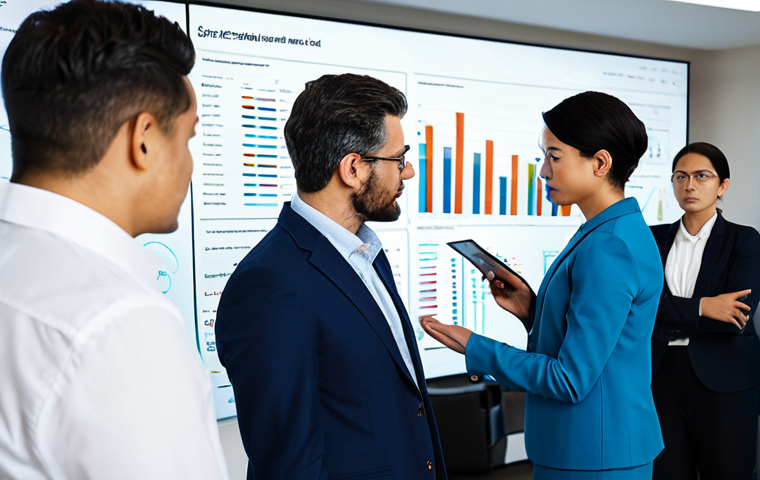
Perhaps one of the most underrated skills in this highly technical field is the ability to communicate complex concepts in a clear, concise, and understandable manner. It’s one thing to build an incredibly sophisticated predictive model; it’s another entirely to explain its implications to a diverse audience ranging from non-technical executives to government regulators or even the general public. I’ve seen brilliant analyses fall flat simply because the presenter couldn’t bridge the gap between their technical expertise and the audience’s understanding. These professionals are masters of this translation, converting intricate statistical analyses into actionable business insights and understandable policy recommendations. They use analogies, visual aids, and compelling narratives to ensure that key stakeholders grasp the risks, opportunities, and rationale behind critical financial decisions. This communication skill is vital for building consensus, influencing strategic direction, and ensuring that sound financial principles are integrated across an organization. It’s an art form, really, transforming abstract numbers into compelling stories that drive action.
Innovation at the Core: Adapting to Emerging Risks
The world is not static, and neither are the risks we face. From the accelerating pace of climate change impacting property risks to the rapid evolution of cyber threats redefining business continuity, or even the long-term implications of global pandemics on mortality and morbidity rates, new challenges are constantly emerging. This environment demands continuous innovation and an agile approach to risk assessment. What worked yesterday might not be sufficient tomorrow. I’ve personally observed how organizations are scrambling to understand and quantify these novel risks, often with limited historical data to draw upon. This requires a unique blend of creativity, foresight, and a willingness to explore unconventional data sources and modeling techniques. It’s about being proactive rather than reactive, constantly scanning the horizon for the next big disruptor and building the analytical frameworks to address it head-on. The capacity to innovate, to pivot, and to learn rapidly is paramount for staying ahead in a volatile world.
Quantifying Climate Risk and Environmental, Social, and Governance (ESG) Factors
One of the most pressing emerging risks is climate change. Its impact is pervasive, affecting everything from property damage due to extreme weather events to supply chain disruptions and shifts in agricultural yields. Assessing and pricing these long-term, systemic risks is a monumental challenge because historical data may no longer be a reliable predictor of future events. I’ve participated in discussions where the sheer scale of the uncertainty regarding climate models makes traditional risk assessment extremely difficult. Furthermore, the growing emphasis on Environmental, Social, and Governance (ESG) factors means that companies must not only quantify direct climate risks but also consider their carbon footprint, labor practices, and board diversity, as these factors increasingly influence investment decisions and public perception. These are complex, multi-faceted issues that require novel approaches to data integration and modeling, extending far beyond traditional financial metrics. It’s a frontier where financial expertise meets environmental science and social responsibility, pushing the boundaries of what risk management truly entails.
The Evolving Threat Landscape: Cybersecurity and Digital Risks
As our lives become increasingly digital, so too do the risks. Cybersecurity threats, data breaches, and digital fraud are no longer just IT problems; they are significant financial risks that can cripple businesses and erode public trust. The challenge here is the incredibly dynamic nature of these threats – new vulnerabilities are discovered daily, and attack methods evolve rapidly. I’ve seen countless discussions about how traditional insurance models struggle to keep pace with the speed and sophistication of cyberattacks. This requires a continuous learning loop, integrating real-time threat intelligence with historical incident data to build robust cyber insurance products and risk mitigation strategies. It’s not just about covering financial losses; it’s about understanding the ripple effect of a breach on reputation, operational continuity, and regulatory compliance. The actuarial skill set is proving invaluable in translating the technical complexities of cybersecurity into quantifiable financial exposures, allowing businesses to better prepare for and recover from digital disruptions, a truly modern challenge that demands modern solutions.
The Future is Now: Automation, Augmentation, and Professional Growth
The landscape of financial risk management is evolving at a breakneck pace, driven by technological advancements. Many might imagine these professionals hunched over spreadsheets, but the reality is far more dynamic. Automation is handling the more repetitive, data-intensive tasks, freeing up human capital for higher-value activities. This isn’t about replacing human expertise but augmenting it, making it more powerful and insightful. I’ve witnessed the shift towards professionals spending less time on data cleaning and routine calculations and more time on model design, scenario analysis, and strategic consulting. This reorientation elevates the role, transforming it from a purely technical one to a more strategic and visionary position within organizations. It’s an exciting time to be in this field, as technology enables a deeper dive into complex problems and fosters unprecedented levels of predictive power, reshaping the very definition of financial foresight and the skills required to excel in it. The future isn’t a distant concept; it’s the daily reality of these trailblazers.
Automation and the Augmentation of Human Expertise
The narrative often circulating about AI and automation replacing jobs tends to overlook a crucial aspect: augmentation. In financial risk, automation is primarily taking over the laborious, repetitive tasks that once consumed countless hours. Think about the automated ingestion of vast datasets, the preliminary cleaning, and even some routine model runs. This isn’t about eliminating human roles; it’s about empowering professionals to focus on higher-level critical thinking, strategic problem-solving, and the interpretation of complex results. I’ve seen firsthand how these tools allow them to run hundreds of scenarios in minutes, identify subtle anomalies that would be missed manually, and test hypotheses with incredible speed. This frees them to engage in more sophisticated model building, collaborate across departments, and provide invaluable strategic advice. It elevates their role from number-crunchers to strategic advisors, leveraging technology to amplify their intellectual capabilities rather than supersede them. It’s truly about making human professionals more effective, efficient, and ultimately, more impactful.
| Risk Type | Traditional Assessment Focus | Modern (AI/ML Enhanced) Assessment Focus |
|---|---|---|
| Mortality/Longevity Risk | Historical population tables, basic demographics | Individual health data, lifestyle factors (wearables), socio-economic determinants, real-time health trends |
| Property Damage Risk | Geographic location, building type, past claims | Hyper-local climate data, predictive weather models, individual property maintenance history, satellite imagery for vulnerability assessment |
| Cyber Risk | Industry averages, basic security audits | Real-time threat intelligence, network behavior analysis, vulnerability scanning, security posture analytics |
| Auto Insurance Risk | Driver age, vehicle type, driving record, zip code | Telematics data (speed, braking, mileage), real-time traffic conditions, individual driving behavior patterns, road conditions |
The Evolving Skill Set: From Calculation to Collaboration
The skills required to thrive in this evolving landscape are shifting. While a strong foundation in mathematics, statistics, and economics remains essential, there’s an increasing demand for skills in areas like data science, machine learning, and advanced programming languages such as Python or R. However, what truly distinguishes top-tier professionals now, in my opinion, is their ability to combine these technical proficiencies with strong soft skills. We’re talking about critical thinking, problem-solving, creativity, and, perhaps most importantly, communication and collaboration. As models become more complex and interdisciplinary, the ability to work effectively with data scientists, IT specialists, business strategists, and even marketing teams becomes paramount. I often emphasize to aspiring professionals that the days of isolated technical work are largely over; success increasingly hinges on one’s capacity to connect with diverse teams, articulate complex findings to non-experts, and contribute to holistic business solutions. It’s a dynamic and intellectually stimulating career path for those who embrace continuous learning and interdisciplinary engagement.
Conclusion
As I reflect on the incredible evolution of financial risk management, what truly stands out is the profound blend of human ingenuity and technological prowess. We’ve moved far beyond simple spreadsheets to a dynamic world of predictive analytics, machine learning, and real-time data, yet the core purpose remains steadfast: to provide certainty in an inherently uncertain world. From my vantage point, the professionals in this field aren’t just number-crunchers; they are the architects of stability, continuously adapting to new challenges, from climate change to cyber threats. They safeguard our financial futures, allowing businesses to thrive and individuals to plan with confidence, all while navigating an increasingly complex global landscape. It’s a testament to their foresight and adaptability that we can face tomorrow with a greater sense of security.
Useful Information
1. Career Pathways: For those intrigued by this field, consider degrees in actuarial science, data science, statistics, mathematics, or financial engineering. Many roles also value advanced certifications like the FSA (Fellow of the Society of Actuaries) or CFA (Chartered Financial Analyst).
2. Essential Skills: Beyond technical expertise, strong communication, critical thinking, problem-solving, and ethical judgment are paramount. The ability to translate complex data into actionable insights for non-technical audiences is a game-changer.
3. Real-World Impact: The work of financial risk professionals underpins nearly every financial product you interact with – from your car insurance premiums and retirement savings plans to the stability of banks and the viability of large-scale infrastructure projects.
4. Technological Frontier: Keep an eye on advancements in AI, machine learning, and big data analytics. These technologies are rapidly transforming how risks are assessed, managed, and mitigated, making the field more dynamic and exciting than ever before.
5. Ethical Considerations: With great power comes great responsibility. The use of advanced analytics necessitates a strong ethical compass to ensure fairness, prevent bias in models, and maintain transparency in how financial decisions are made.
Key Takeaways
The field of financial risk management is a critical and evolving domain, blending human expertise with cutting-edge technology to quantify and navigate an unpredictable world. Professionals in this area are increasingly leveraging big data, AI, and machine learning to forecast trends, personalize risk assessments, and design sustainable financial products. While technology augments their capabilities, human elements like ethical judgment, critical thinking, and effective communication remain indispensable. This dynamic field continues to innovate, addressing emerging global risks and ensuring financial stability for individuals and institutions alike.
Frequently Asked Questions (FAQ) 📖
Q: How do actuaries manage to predict something as unpredictable as human lifespan or natural disasters for my insurance premium? It feels like guesswork sometimes!
A: You know, it’s a question I’ve pondered myself, watching the news about some record-breaking storm or thinking about my own health. It certainly feels like a guessing game from the outside, but trust me, what actuaries do is far from it.
When they’re figuring out things like your life insurance premium or how much your car insurance will cost after that fender bender, they aren’t just pulling numbers out of thin air.
They’re diving deep into massive historical datasets – I mean, decades of information on everything from mortality rates across different age groups and demographics to the frequency and severity of hurricanes hitting the Gulf Coast or wildfires sweeping through California.
They’ll look at public health trends, economic forecasts, even changes in consumer behavior. It’s like they’re not just looking at a single puzzle piece, but meticulously assembling a colossal jigsaw, using sophisticated statistical models to find patterns and probabilities.
They don’t predict your exact lifespan, but rather the likelihood of people like you living to a certain age. And for disasters, they’re not saying when the next big one hits, but rather quantifying the financial impact if it does hit, based on decades of past events and the changing climate.
It’s less about a crystal ball and more about building incredibly detailed, multi-layered simulations of the future. I’ve seen firsthand how they wrestle with these uncertainties, constantly refining their models as new data comes in.
It’s truly a blend of rigorous mathematics and a nuanced understanding of the world around us.
Q: With so much talk about
A: I and big data, how has the actuary’s role actually evolved? Are they just data scientists now, or is there more to it? A2: That’s a brilliant question, and one I hear a lot, especially as AI seems to be everywhere.
From my perspective, having watched this field transform, it’s definitely not a simple case of actuaries being replaced by or becoming just data scientists.
Think of it this way: for decades, actuaries were the masters of traditional statistical tools, meticulously building models by hand, sifting through data points one by one.
Now, with AI and big data, it’s like they’ve been handed a supercar instead of a reliable sedan. They’re leveraging machine learning algorithms to process truly immense, complex datasets that were impossible to manage before – things like real-time sensor data from connected cars, detailed health records, or even satellite imagery for property risk assessment.
This allows them to identify subtle correlations and predict trends with far greater precision and speed. But here’s the crucial part: the AI is a tool.
It’s incredibly powerful for spotting patterns, but it doesn’t understand context, human behavior, or the ethical implications of its predictions. That’s where the actuary steps in, and frankly, it’s where their unique expertise really shines.
They’re the ones who interpret the AI’s output, question its assumptions, ensure fairness, and translate those complex insights into actionable, human-centric strategies for insurance products or pension plans.
It’s a fantastic partnership – the AI handles the heavy computational lifting, freeing the actuary to focus on the strategic thinking, risk interpretation, and the art of applying that data wisely to real-world problems.
Q: Beyond just setting insurance prices, where else do actuaries make a real impact that perhaps we don’t often see? How do they truly safeguard our collective future, as the text suggests?
A: Oh, this is where the unsung hero aspect really comes into play, and it’s something I wish more people understood! While insurance premiums are the most visible part of their work for most of us, actuaries are deeply embedded in so many other crucial aspects of our financial security, often behind the scenes.
For instance, think about your retirement – your 401(k), pension plans, or even the future of Social Security. Actuaries are the ones meticulously forecasting future financial obligations, assessing investment risks, and ensuring these funds remain solvent for decades to come.
It’s a huge responsibility that literally affects generations. They also play a pivotal role in healthcare, modeling the cost of new treatments, designing health benefit plans, and helping governments and companies manage rising healthcare expenditures.
I’ve heard stories from actuaries working on everything from designing robust employee benefits packages for major corporations to advising governments on the financial viability of public infrastructure projects.
They’re also critical in enterprise risk management, helping businesses identify, quantify, and mitigate a vast array of risks, from supply chain disruptions to cyberattacks.
Essentially, anytime there’s a long-term financial commitment tied to uncertain future events, there’s an actuary at work, meticulously turning chaos into calculated opportunity.
They really are the bedrock of so many financial systems that we rely on daily, safeguarding our collective future by ensuring these systems are not just stable, but also sustainable and fair.
📚 References
Wikipedia Encyclopedia
구글 검색 결과
구글 검색 결과
구글 검색 결과
구글 검색 결과
구글 검색 결과